

Youth Demand a FAB Treaty in Copenhagen
Posted On Friday, February 19, 2010 by Danielle | | 0 comments
http://www.youtube.com/willsteger1#p/search/1/-sWHCEaNmNE
 Tuesday, December 8th: - Youth have high-level briefing with Chair of the Ad Hoc Working Group on Long-term Cooperative Action Michael Zammit-Cutajar, and John Ashe, Chair of the UN group discussing rich countries’ emissions. - Youth and NGOs meet with EPA Administrator Lisa Jackson, Deputy Special Envoy for Climate Change Jonathan Pershing, and Assistant Secretary of Energy for Policy and International Affairs David Sandelow for an off-the-record meeting.
 Wednesday, December 9th: - Rapid Response team is created! The US Youth are calling friends back home to get them to engage their Senators to vote for domestic climate legislation based on science. Tuvalu protests Danish leaked text outside of a plenary session.
 Thursday, December 10th: - Young and Future Generations Day: 1,000 youth wore bright orange t-shirts that read "How Old Will You Be in 2050?" and "Don't Bracket Our Future" bringing light to the issue that youth will bare the brunt of climate change. - Indian Youth Representative gives amazing speech at meeting with Yvo de Boer - watch the video: http://www.youtube.com/willsteger1#p/search/0/4XTr2VEhIBY
US and Chinese youth meet to discuss commonalities between our countries and develop strategic positions and actions for the negotiations. Watch the resulting press conference: http://www.youtube.com/willsteger1#p/search/0/4lLvpC4Ky9M
Friday, December 11th: Saturday, December 12th: - Biggest march around climate change ever. The streets of Copenhagen were a sea of lights when over 100,000 people joined together in a march for international awareness of climate change issues and calling for a legally binding treaty at the end of this week based on science. Watch the video: http://www.youtube.com/willsteger1#p/search/0/jsSreaR3O0Y
UN Climate Change Summit Take 15 And....Action
Posted On Friday, February 19, 2010 by Aurora C | | 0 comments


We want YOU for strong US climate legislation
Posted On Sunday, February 07, 2010 by Jamie | | 0 comments
The Copenhagen climate conference taught me we will have to adapt to the effects of climate change. If this had not been clear in my mind beforehand, the stories I heard from global young people awoke me to reality. I heard about droughts in Kenya and floods in Bangladesh. Youth from my local area shared stories of environmental illnesses and inequities. In addition, Pershing, the head United States negotiator at the conference, explained to us in a hearing that while we do not know the exact amount of funding that will be needed for climate change adaptation in the coming decades, the numbers will be high and the need is urgent. Change has begun. I know that I cannot sit idly by as climate change accelerates.
What's next?
As I continue to reflect on my intense team experience of the negotiations, I ask myself how I can help a changing world transition into a healthier place where we will continue to face climate change. The most important lesson I learned in Copenhagen was how critical it is for me to work within my own community to create solutions to climate change. The Midwest will be a critically important region as we work for national climate legislation, and I have political power as a voter and organizer in a swing state. This legislation could help our Midwest states thrive as we shift to a new clean energy economy.

This fall, riding my bike around Minnesota with Reed, I saw many examples of climate solutions. This trip inspired me to find ways to engage my community through gardening, alternative transportation, and other measures for adapting to a changing world. The Midwest contains vast stretches of agricultural land and a large portion of the earth’s fresh water. We have many opportunities to lead the globe through local initiatives.
Through the Copenhagen conference, I also realized that my work to study past adaptations to climate change and vulnerable ecosystems has real value for us today. I fell in love with archaeology in high school and decided to focus on ancient food production in college. More sustainable, healthier agricultural systems are possible, and past farming techniques can provide examples for how to innovate and move forward without fossil fuels. Every area of study, and every student, can help us face the future as responsible citizens of the globe through local action. What will you do?
 Actively pursuing climate legislation, my home environmental group is revamping our efforts to engage students with the issues that face the Senate this spring. With the health care bill coming to a close, the Senate will now begin to vote on the American Clean Energy and Security Act (ACES Bill). It is of the utmost importance that a climate bill is passed in order for the U.S. to participate in future COP negotiations. My own personal understand is this; our government will never agree to an internationally binding treaty unless we have passed climate legislation first in our homeland. This is why we must all join together and continue to pressure legislators to vote green.
Throughout this semester I will be working directly with NDSU's student body government to coordinate events focused around climate legislation. I will also be giving talks and lectures to the local community on topics such as biofuel, oil-dependency and sustainability. I hope to continue working with grades K-12 in new partnership recently formed with university faculty as well as Repower America, the National Wildlife Federation and the Prairie Stewardship Network. This will be an active time for everyone!
Actively pursuing climate legislation, my home environmental group is revamping our efforts to engage students with the issues that face the Senate this spring. With the health care bill coming to a close, the Senate will now begin to vote on the American Clean Energy and Security Act (ACES Bill). It is of the utmost importance that a climate bill is passed in order for the U.S. to participate in future COP negotiations. My own personal understand is this; our government will never agree to an internationally binding treaty unless we have passed climate legislation first in our homeland. This is why we must all join together and continue to pressure legislators to vote green.
Throughout this semester I will be working directly with NDSU's student body government to coordinate events focused around climate legislation. I will also be giving talks and lectures to the local community on topics such as biofuel, oil-dependency and sustainability. I hope to continue working with grades K-12 in new partnership recently formed with university faculty as well as Repower America, the National Wildlife Federation and the Prairie Stewardship Network. This will be an active time for everyone!

It has been a month since Copenhagen, and since I have had some time to reflect and think of ways in which we need to move forward in order to get ready for COP16 in Mexico and to help mitigate and adapt to the problem of Climate Change. After all, if there is one thing that I have learned is that we have the power to drive change. International negotiations, although critical to drive a cohesive change and hold accountability from different parties, are not the only solution that we have. We need to continue moving forward and take action on an individual level in order to make an impact that in turn demands results from our government. I have come to summarize what I personally need to do in 3 main categories, hopefully you will find these ideas helpful and will use them to guide in making a change….
1. Track and reduce my carbon footprint. I know that I am not perfect and that there are always more things that I can do to reduce my carbon footprint. Also as an engineer, I know that step one to make any sort of reduction is to keep account of your carbon footprint. It is easy and there are many small things you can do to reduce your emissions. Lead by example and make sure that others see the benefits of your actions, they might choose to join. Here is a link to a calculator that I have used. http://www.epa.gov/climatechange/emissions/ind_calculator.html
2. Educate! Since being back from Copenhagen I have encountered many people that are not necessarily involved in the climate movement. I have met several people who are still skeptics or that just don’t have enough information in order to care. This is why education is key, it opens opportunities for others to learn about the subject and decide if they want to make a difference. Education does not have to be formal, it could be over a cup of coffee, with family and friends or coworkers! Stay up to date with the news and the science and share your knowledge with others. Facts speak for themselves and they do cause people to see things in a different light. I always find this link helpful when looking for accurate data on climate change. http://www.ipcc.ch/
3. Let your representatives know. If there was one message that I heard through Copenhagen from the different politicians and negotiators that were at the conference it was this… they all encouraged the youth to continue pressuring our politicians, let them know that we want a sustainable future and that we are the ones carrying the burden of the decisions made today. We need to understand that although we are a strong and impactful group, there are still many powerful people that for some reason or another choose to not believe in the facts and are putting pressure on government to not pass climate legislation or to not be capped by carbon emissions. We need to ensure that we have a louder voice, that we carry a message and that we ensure this message reaches the highest levels of government. We need to continue working hard and make sure that our message makes a difference.

In Grand Rapids the organization Local First has helped spur a movement in the city to think and buy local. The popular phrase, Think Globally, Act Locally has been an inspiration to citizens, students, and children alike and it has especially had a meaningful impact on me. This simple phrase is what has driven me to do the work that I do in my community, and it was only reinforced during the negotiations in Copenhagen.
Storytelling, one of the main ways that I connect with my community and with what’s happening around the world also proved to be very important. First, to make sense of the labyrinth that was the Bella Center I found it was best for me to choose one or two stories to follow and watch unfold until I could share it with others. For example, I decided to pay close attention to the actions of the U.S. Youth Delegation so that I could tell the media and our decision makers about what we were doing at the negotiations. With 500+ U.S. youth participating in the talks it’s easy to imagine the wealth of stories to share.
Secondly, telling the narrative of Expedition Copenhagen and highlighting the Midwest to everyone I met enabled me to make connections with people from around the world that had similar experiences. Listening to other stories demonstrated the broad implications of climate change and helped me generate new ideas for solutions based thinking. The simple act of sharing my story was the best way for me to act locally on a global scale.
What I already knew, but what was made even clearer during the negotiations was that our local stories connect us to people from around the world. We are all interconnected, and our stories are powerful enough to cross every barrier. There are billions of people around the world that have similar struggles and victories as you and me. Circumstances may be different, but we can usually find a place where our stories cross paths. In Copenhagen I heard and followed hundreds of these accounts and shared the story of the Midwest with everyone I met. Ultimately, we have to remember that all of these stories go back to our roots.
The work that I have been doing in Grand Rapids, and what each delegate on the Expedition Copenhagen team has been engaged in, is what made it critical that we took part in these talks. Global climate change is a huge issue to tackle with thousands of angles to look at. The only way to remain grounded and in touch with reality is to hear about the effects of climate change on communities by people from those communities. That is why thousands of civil society members registered to participate in these negotiations – they wanted, rather needed, to share their narrative to remind decision makers why they must take significant action on climate change now.
During the 1992 Earth Summit in Rio de Janeiro, there were over two thousand registered NGO organizations. Since that time the number of civil society members participating in climate talks has increased significantly. Copenhagen was the largest convergence of people on the issue of climate change with over 45,000 registered people plus thousands more staying in the city to help organize outside events, marches and protests.
Reflected in this number is the amount of attention currently being paid to the climate crisis. Over 110 heads of state took part in these negotiations, and we are now closer than ever to signing an international treaty. Thus, it is easy to assume that the thousands of stories shared by these people are impossible for the decision makers to miss. Without these narratives we would not be this close to taking the bold action that is necessary because they are the driving force behind the positive changes taking place.
We cannot have a sustainable world without first starting in our homes, schools, cities and governments. After we start to strengthen our roots can we begin to grow the movement internationally. The fact that in Copenhagen we were on the cusp of signing an international legally binding treaty to stop global climate change demonstrates how important these local actions are to securing a safe and just future. The purpose that civil society and Expedition Copenhagen delegates served was to act as visible representations of the effects of and solutions to climate change.
The stories from my community keep me grounded, and they are the reason why I went to Copenhagen. The lessons I learned from the stories I heard and followed during the negotiations are why I came back more empowered, more inspired, and more ready to work locally and help transition our global society to be more just and sustainable. We have to focus local to impact global and we have to remember that we are not insignificant. What we do in our local communities is not insignificant. It’s the most important work that can be done.
Beyond Copenhagen: The Trail Tale Continues
Posted On Monday, January 18, 2010 by Reed Aronow | | 0 comments

Many voices sounded in the streets across Copenhagen this past December, and they came together late in the evening on the 18th of December as COP15 came to a close.
On that night, I sat in a small Danish apartment with a few of my fellow delegates and listened to President Obama give his final words on the accord. For the first time in near two and a half weeks, the world seemed quiet. Shock, exhaustion, disappointment, confusion... his seemingly empty words hung in the air. All I could hear was the breathing of my comrades and his political statement. Not a statement of conviction, of passion, of progression, of change... a statement of politics.
I felt deceived, brokenhearted, emotional and worn out. What had we worked so hard for? What does this mean for us? For humanity? What does this mean? I felt blindsided by the auditory wrecking ball delivered by my President that thrust a gaping hole into my relentless hope for the impossible.
The world was quiet and still.
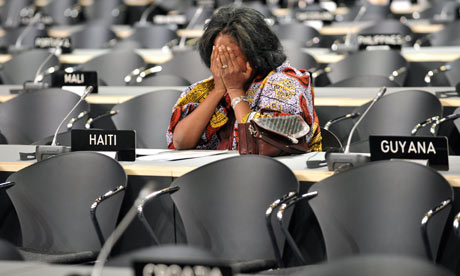
I took some time to talk with my friends and put this new reality to the back of my head. Just for a few hours, then I returned to the quiet. The quiet that had settled over Copenhagen and over the youth movement. For the first time in two weeks, I did not have 350 emails to check by the end of the day. The world slowed back down. My psyche reverted to the corner of my mind with the over-sized sofa and low-light lamp where I go to reflect when I don't know what to think. This is where I stayed for the next few days and my long travels home.
A few weeks later and back at home, a renewed passion has reignited in my heart. I have returned home to the thought and aspiration that initially inspired me to apply for Expedition Copenhagen: local, sustainable communities.
I met hundreds of young people and thousands of people of all ages from all over the world; each of their home communities has different ways to meet the same goal as communities all over the world: local and sustainable. We need to take care of each other here, at home. We can address this global issue of climate change through local solutions. The Midwest specifically has phenomenal opportunity to become a leader domestically and internationally through clean energy development.
2010 must be a year of action. We must continue to hold our leaders at the top to the promises they campaign on, but we cannot go to the top alone. Our action, as we know, needs to happen at all levels of government and in the home of our community members.

SD Messages Arrive Safely to President Obama
Posted On Thursday, January 14, 2010 by Jamie | | 0 comments
Inspiration from Peers, Not Leaders
Posted On Friday, December 18, 2009 by Jamie R., WI | | 0 comments
Why Michigan Needs the U.S. Senate to Act
Posted On Friday, December 18, 2009 by Danielle | | 0 comments
 My father has been a union electrician for 30 years in the metro-Detroit area. He has been a committed worker and supporter of his union, the International Brotherhood of Electrical Workers (IBEW) his entire career. He is also a strong supporter of American made goods and jobs. But he had been unemployed for almost two years now because of the recession. He repeatably has said to me that the job market will never again be the same in Michigan and that he is worried that steady work will be difficult to find in the next few years. Through a new comprehensive climate and clean energy bill, we can revive the United States, and Michigan's manufacturing base around this new low carbon, clean energy economy.
At the end of Expedition Copenhagen, we wrote this op-ed on behalf Expedition Copenhagen urging the U.S. Senate to Act - it matters to my Dad, to Michigan, to the U.S., and the world:
Greetings from the United Nations Climate Change Conference in Copenhagen!
We are the Midwestern youth delegates of Expedition Copenhagen, a partnership between Will Steger Foundation (WSF) and Stonyfield Farm. WSF is a non-profit organization committed to creating local and global climate change solutions through advocacy, education, and outreach. Will Steger, a lifelong arctic explorer, has been an eyewitness to the rapid changes in our climate. He led our delegation of twelve young leaders to Copenhagen to promote Midwestern climate change solutions at the international negotiations.
While at the conference, delegates have taken on multiple roles. We attended plenary sessions to observe actual negotiations, conducted press conferences and led educational presentations. We formed working collaborations with our peers from around the world, including China, Canada, Kenya, Denmark, India, Latin America and more. Additionally, we filmed our observations and uploaded high-quality news stories to the web. We wrote blogs and tweets to present our perspective to followers back home. While our days were packed with activities from pre-dawn hours into the night, our mission remains to present the Midwest voice to those here in Copenhagen and, in turn, to be the voice of Copenhagen back in our Midwestern communities.
The Midwest is critical to the success or failure of the conference. We contribute 4-5% of total global warming pollutants, but with our natural resources, our educated workforce, and our agriculture and manufacturing capabilities, we could be a much larger part of the solution. America’s heartland has much to gain economically by tackling climate change, because a clean energy economy will be the largest business opportunity of all time. We have a very strong engineering and technology base and an ability to develop innovative clean-tech jobs, renew our economy and put millions of Midwesterners back to work while reducing our reliance on foreign oil. As breadbasket to the world, we have energy solutions on our farms too, such as wind power, carbon offsets, and the next generation of biofuels. Lastly, many of those in our generation are just now graduating from Midwestern universities with degrees that will be essential to restoring economic prosperity to our communities while solving one of the world’s most daunting challenges.
The whole world looked to the U.S. to help negotiate a comprehensive climate agreement here. Similarly, the whole world is watching the United States Senate to see that it enacts President Obama’s pledges here in Copenhagen. Midwest U.S. Senators are the critical players in passing a comprehensive jobs and energy bill that is at a standstill on the Senate floor. Our Senators comprise some of the most important votes that will determine the fate of the Earth. They have the opportunity to lead the transition to secure, sustainable societies all around the world, with good jobs and the economic engine powerful enough to solve the problem.
Call your U.S. Senate offices today. The message is this: the whole world is waiting on you. Enact a clean energy jobs bill now.
Expedition Copenhagen Delegates:
Reed Aronow, St. Paul, MN
Liana Balinski-Baker, Chicago, IL
Aurora Conley, Bad River, WI
Megan Constans, Fargo, ND
Maia Dedrick, St. Paul, MN
Chris Detjen, Detroit, MI
Jamie Horter, Bristol, SD
Holly Jones, Mt. Pleasant, IA
Sarah Mullkoff, Lansing, MI
Chalie Nevarez, Milwaukee, WI
Danielle Ostafinski, Grand Rapids, MI
Jamie Racine, Racine, WI
My father has been a union electrician for 30 years in the metro-Detroit area. He has been a committed worker and supporter of his union, the International Brotherhood of Electrical Workers (IBEW) his entire career. He is also a strong supporter of American made goods and jobs. But he had been unemployed for almost two years now because of the recession. He repeatably has said to me that the job market will never again be the same in Michigan and that he is worried that steady work will be difficult to find in the next few years. Through a new comprehensive climate and clean energy bill, we can revive the United States, and Michigan's manufacturing base around this new low carbon, clean energy economy.
At the end of Expedition Copenhagen, we wrote this op-ed on behalf Expedition Copenhagen urging the U.S. Senate to Act - it matters to my Dad, to Michigan, to the U.S., and the world:
Greetings from the United Nations Climate Change Conference in Copenhagen!
We are the Midwestern youth delegates of Expedition Copenhagen, a partnership between Will Steger Foundation (WSF) and Stonyfield Farm. WSF is a non-profit organization committed to creating local and global climate change solutions through advocacy, education, and outreach. Will Steger, a lifelong arctic explorer, has been an eyewitness to the rapid changes in our climate. He led our delegation of twelve young leaders to Copenhagen to promote Midwestern climate change solutions at the international negotiations.
While at the conference, delegates have taken on multiple roles. We attended plenary sessions to observe actual negotiations, conducted press conferences and led educational presentations. We formed working collaborations with our peers from around the world, including China, Canada, Kenya, Denmark, India, Latin America and more. Additionally, we filmed our observations and uploaded high-quality news stories to the web. We wrote blogs and tweets to present our perspective to followers back home. While our days were packed with activities from pre-dawn hours into the night, our mission remains to present the Midwest voice to those here in Copenhagen and, in turn, to be the voice of Copenhagen back in our Midwestern communities.
The Midwest is critical to the success or failure of the conference. We contribute 4-5% of total global warming pollutants, but with our natural resources, our educated workforce, and our agriculture and manufacturing capabilities, we could be a much larger part of the solution. America’s heartland has much to gain economically by tackling climate change, because a clean energy economy will be the largest business opportunity of all time. We have a very strong engineering and technology base and an ability to develop innovative clean-tech jobs, renew our economy and put millions of Midwesterners back to work while reducing our reliance on foreign oil. As breadbasket to the world, we have energy solutions on our farms too, such as wind power, carbon offsets, and the next generation of biofuels. Lastly, many of those in our generation are just now graduating from Midwestern universities with degrees that will be essential to restoring economic prosperity to our communities while solving one of the world’s most daunting challenges.
The whole world looked to the U.S. to help negotiate a comprehensive climate agreement here. Similarly, the whole world is watching the United States Senate to see that it enacts President Obama’s pledges here in Copenhagen. Midwest U.S. Senators are the critical players in passing a comprehensive jobs and energy bill that is at a standstill on the Senate floor. Our Senators comprise some of the most important votes that will determine the fate of the Earth. They have the opportunity to lead the transition to secure, sustainable societies all around the world, with good jobs and the economic engine powerful enough to solve the problem.
Call your U.S. Senate offices today. The message is this: the whole world is waiting on you. Enact a clean energy jobs bill now.
Expedition Copenhagen Delegates:
Reed Aronow, St. Paul, MN
Liana Balinski-Baker, Chicago, IL
Aurora Conley, Bad River, WI
Megan Constans, Fargo, ND
Maia Dedrick, St. Paul, MN
Chris Detjen, Detroit, MI
Jamie Horter, Bristol, SD
Holly Jones, Mt. Pleasant, IA
Sarah Mullkoff, Lansing, MI
Chalie Nevarez, Milwaukee, WI
Danielle Ostafinski, Grand Rapids, MI
Jamie Racine, Racine, WI
LEAKED Document Shocks World Community
Posted On Friday, December 18, 2009 by Jamie R., WI | | 0 comments
 PLEASE NOTE:
This is a confidential doc that has been leaked, with the Annex 1 countries' pledges...when added up they amount to 550ppm and a 3 degree temp rise.
Before the sun hit the streets today, thousands opened their e-mail here in Copenhagen and around the world to read a leaked document from the Secretariat's office. The document outlines draft text from late night meetings at the Bella Center -- text that reflects a dramatically higher number of parts per million (ppm) than the IPCC and hundrescientists around the world agree to be safe for our survival.
Numbers have been a part of near every conversation in and outside the Bella Center:
1.5: the amount of inches in sea level rise that are tolerable for human survival in island nations
350: the ppm of carbon we need to stabilize the atmosphere
280: the highest number of ppm in the atmosphere PRE-industrial revolution
390: the ppm currently in the atmosphere
12 million: the number of global citizens for climate action; this number is continuously rising
"I was disgusted that after all the discussion around no more than 2 degrees, this comes out," Danielle Ostafinski states in response to the document. "Two degrees is even too high." Danielle is one of 500 youth from the United States and over 2000 youth from around the world. Over the last two weeks, youth have taken a stand behind the numbers 350 and 1.5 online, on the streets and in the Bella Center.
One of the leaders of the number campaigns is 350.org's Bill McKibben. His name was
PLEASE NOTE:
This is a confidential doc that has been leaked, with the Annex 1 countries' pledges...when added up they amount to 550ppm and a 3 degree temp rise.
Before the sun hit the streets today, thousands opened their e-mail here in Copenhagen and around the world to read a leaked document from the Secretariat's office. The document outlines draft text from late night meetings at the Bella Center -- text that reflects a dramatically higher number of parts per million (ppm) than the IPCC and hundrescientists around the world agree to be safe for our survival.
Numbers have been a part of near every conversation in and outside the Bella Center:
1.5: the amount of inches in sea level rise that are tolerable for human survival in island nations
350: the ppm of carbon we need to stabilize the atmosphere
280: the highest number of ppm in the atmosphere PRE-industrial revolution
390: the ppm currently in the atmosphere
12 million: the number of global citizens for climate action; this number is continuously rising
"I was disgusted that after all the discussion around no more than 2 degrees, this comes out," Danielle Ostafinski states in response to the document. "Two degrees is even too high." Danielle is one of 500 youth from the United States and over 2000 youth from around the world. Over the last two weeks, youth have taken a stand behind the numbers 350 and 1.5 online, on the streets and in the Bella Center.
One of the leaders of the number campaigns is 350.org's Bill McKibben. His name was  scrawled across the top of the leaked document leading many skeptics to believe that there is a conspiracy. They are using this to discredit his powerful global movement. Read McKibben's response to skeptics here.
Whatever the intentions of the unknown person that leaked the document (or conspiracy theories behind it), the fact remains that we are in the last 24 hours of the Copenhagen conference; we are down to crunch time and heads of state have flown in from all over the world to make their statements.
Hope is lined with anxiety throughout conversations across the city and world today as President Obama arrives. Though hope is focused on him to take strong political action and to do the right thing, the decision(s) he makes today or doesn't make will reflect the round-the-clock work of his negotiators over the past two weeks.
As youth, we hope that our voices will continue to ring through the halls and plenary sessions despite our exclusion from the process.
See the complete leaked document here.
scrawled across the top of the leaked document leading many skeptics to believe that there is a conspiracy. They are using this to discredit his powerful global movement. Read McKibben's response to skeptics here.
Whatever the intentions of the unknown person that leaked the document (or conspiracy theories behind it), the fact remains that we are in the last 24 hours of the Copenhagen conference; we are down to crunch time and heads of state have flown in from all over the world to make their statements.
Hope is lined with anxiety throughout conversations across the city and world today as President Obama arrives. Though hope is focused on him to take strong political action and to do the right thing, the decision(s) he makes today or doesn't make will reflect the round-the-clock work of his negotiators over the past two weeks.
As youth, we hope that our voices will continue to ring through the halls and plenary sessions despite our exclusion from the process.
See the complete leaked document here.
Notes From the Trail: Copenhagen: 24 Hours Left
Posted On Thursday, December 17, 2009 by Reed Aronow | | 0 comments
Walk-outs and sit-ins urge change.
Posted On Wednesday, December 16, 2009 by Jamie R., WI | | 0 comments
 Demonstrators walk out to join people's forum outside the Bella Center.
(photo by Daygot Leeyos)
As thousands marched towards the Bella Center this morning, hundreds inside marched out.
These actions were sparked by a combination of two things:
1. limited access to NGO's (non-governmental organizations) and
2. stagnant negotiations between Annex I (developed) countries and G77 (developing) countries.
The world's media are representing these actions with a variety of headlines. The majority of western (primarily Annex I) countries are telling the stories more from the perspective of the police and their reactions, i.e. Danish Police Brace for Protests and Danish Police Use Tear Gas against Climate Protestors.
In contrast, many developing nations' media speak to the less hostile action, i.e. Climate Talks Tense After Walk Out.
There are currently about a dozen youth (at least) sitting in or caring for those sitting in at the Bella Center. Stay up-to-date on their stories here.
With people walking out of, sitting in and walking many miles in the streets towards the Bella Center amidst police questioning and brutality, it's difficult to tell what action(s) in the city have the ability to make a significant difference on the negotiatiors' positions while also making political change back home.
Demonstrators walk out to join people's forum outside the Bella Center.
(photo by Daygot Leeyos)
As thousands marched towards the Bella Center this morning, hundreds inside marched out.
These actions were sparked by a combination of two things:
1. limited access to NGO's (non-governmental organizations) and
2. stagnant negotiations between Annex I (developed) countries and G77 (developing) countries.
The world's media are representing these actions with a variety of headlines. The majority of western (primarily Annex I) countries are telling the stories more from the perspective of the police and their reactions, i.e. Danish Police Brace for Protests and Danish Police Use Tear Gas against Climate Protestors.
In contrast, many developing nations' media speak to the less hostile action, i.e. Climate Talks Tense After Walk Out.
There are currently about a dozen youth (at least) sitting in or caring for those sitting in at the Bella Center. Stay up-to-date on their stories here.
With people walking out of, sitting in and walking many miles in the streets towards the Bella Center amidst police questioning and brutality, it's difficult to tell what action(s) in the city have the ability to make a significant difference on the negotiatiors' positions while also making political change back home.
If We Go Forward, Will Others Follow? John Kerry speaks on the U.S. role at COP15
Posted On Wednesday, December 16, 2009 by Megan | | 0 comments
 Warmly introduced by Executive Secretary Yvo de Boer, Kerry spoke of responsibility the U.S. Government and other developed countries owe to the developing countries, holding fast to the old saying "we have a common but differentiated responsibility." Here at COP15, developed countries are particularly struggling to match the financial needs of developing nations and small island states, to which we owe our support after years of unchecked pollution.
Apart from international climate negotiations, Kerry focused on things closer to home as well. He was confident that a climate bill would pass in the Senate early next year while others remain not so sure. But his message today stressed that change would not come quickly. He offered insight to the minds of senators across the U.S. as they approach to climate legislation. Whether the ACES climate bill is passed or not, did not seem to effect Kerry's view of the how the U.S. will progress. "More than 1,000 mayors are taking strict measures to aim towards Kyoto targets--and a number of cities are actually getting close on their own. Across America, grassroots initiatives are sprouting up as citizens lead their leaders," said an enthusiastic Kerry. To the youth in attendance, this was almost as if being called out by name. I personally was thrilled.
This news comes as a reason for hope to many whom doubt the U.S. will take the reins and pull the rest of the world in towards a binding climate treaty. Kerry argued that, "If Dick Cheney can argue that even a 1% chance of a terrorist attack is 100% justification for preemptive action—then surely, when scientists tell us that climate change is nearly a 100% certainty, we ought to be able to stand together, all of us, and join in an all out effort to combat a mortal threat to the life of this planet." I think with this quote I will end, allowing you to contemplate the moral and social demands of this statement.
Warmly introduced by Executive Secretary Yvo de Boer, Kerry spoke of responsibility the U.S. Government and other developed countries owe to the developing countries, holding fast to the old saying "we have a common but differentiated responsibility." Here at COP15, developed countries are particularly struggling to match the financial needs of developing nations and small island states, to which we owe our support after years of unchecked pollution.
Apart from international climate negotiations, Kerry focused on things closer to home as well. He was confident that a climate bill would pass in the Senate early next year while others remain not so sure. But his message today stressed that change would not come quickly. He offered insight to the minds of senators across the U.S. as they approach to climate legislation. Whether the ACES climate bill is passed or not, did not seem to effect Kerry's view of the how the U.S. will progress. "More than 1,000 mayors are taking strict measures to aim towards Kyoto targets--and a number of cities are actually getting close on their own. Across America, grassroots initiatives are sprouting up as citizens lead their leaders," said an enthusiastic Kerry. To the youth in attendance, this was almost as if being called out by name. I personally was thrilled.
This news comes as a reason for hope to many whom doubt the U.S. will take the reins and pull the rest of the world in towards a binding climate treaty. Kerry argued that, "If Dick Cheney can argue that even a 1% chance of a terrorist attack is 100% justification for preemptive action—then surely, when scientists tell us that climate change is nearly a 100% certainty, we ought to be able to stand together, all of us, and join in an all out effort to combat a mortal threat to the life of this planet." I think with this quote I will end, allowing you to contemplate the moral and social demands of this statement.


 Posts
Posts

